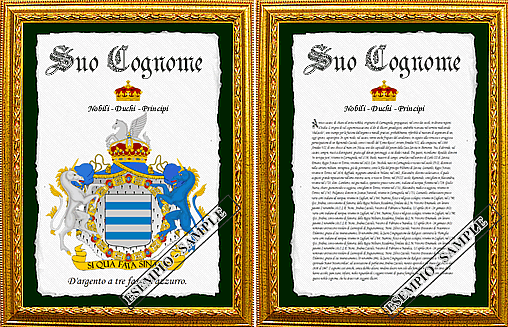
Os Traços Heráldicos é um dossiê feito por um A.I. útil como ponto de partida para pesquisadores e heráldicos apaixonados e confirma que há informação para trabalhar e é possível encomendar um documento heráldico.
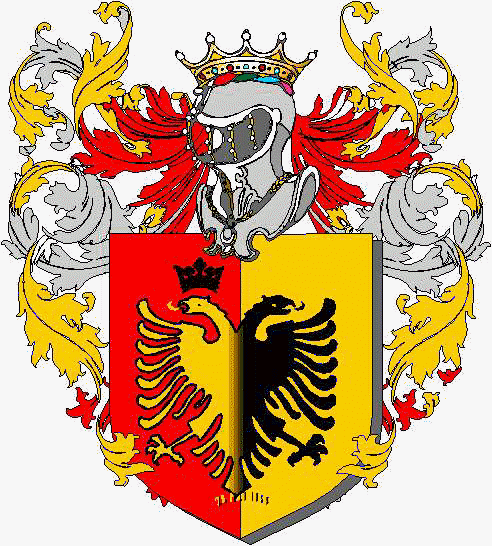
This fam. It is among the oldest and most powerful in Terni and the only one among the existing fringes of the marquis title. For seven centuries it has continuously maintained its tradition and its luster and in every age it has had representatives in the city government or in the command of the militias. Silvestri in his "collection of historical memories" reports the ancient legend that celebrates the progenitor of the family as the founder of the prosperity of the Municipality, because he killed a Grifo who exterminated the inhabitants with pestiferous exhalations. Hence the Grifo coat of arms of Terni and the motto of the family members (Insigne Crimen). The most modern investigation tells us what the foundation of the legend is. A large area under the walls outside the Roman gate was infested with malaria, the families boldly reclaimed it making the city healthy and they gave ...
É possível fazer uma pesquisa preliminar em nosso arquivo. Cerca de 100.000 traços heráldicos, origens de sobrenomes e brasões estão disponíveis gratuitamente. Basta escrever o sobrenome desejado no formulário abaixo e pressionar Enter.
Notas legais
Os Traços Heráldicos é um dossiê feito por um A.I. útil como ponto de partida para pesquisadores e heráldicos apaixonados e confirma que há informação para trabalhar e é possível encomendar um documento heráldico.
As variações de sobrenomes são frequentes e derivam principalmente de atos involuntários, como erros de tradução ou inflexões dialetais, ou de atos voluntários, como tentativas de escapar da perseguição ou aquisição de títulos e propriedades de outras famílias